
Permanent Biocompatible Tooth Restoration: Rebuilding Chewing Function with Zirconia Solutions
Permanent tooth replacement with ceramic restorations restores structural chewing integrity while avoiding systemic metallic exposure. Dental Wellness of Albany utilizes biocompatible zirconia implants combined with platelet-rich fibrin protocols to accelerate bone integration, optimize long-term tissue health, and rebuild lasting oral wellness for Capital Region patients.
Living with missing teeth or loose partial dentures creates daily challenges when dining or speaking throughout the Capital Region. At Dental Wellness of Albany, our team approaches tooth replacement through an integrative biological lens that prioritizes total-body harmony. Restoring missing roots requires materials that co-exist peacefully with bone cells and surrounding soft tissue structures. Through biocompatible zirconia, a high-strength ceramic material that eliminates metallic corrosion and tissue discoloration, patients receive tooth replacements engineered for biological acceptance. Achieving seamless osseointegration, the direct structural bonding between living bone tissue and an artificial root surface, ensures long-term stability without triggering immune sensitivities. Choosing non-toxic tooth replacement along the Delaware Avenue corridor allows individuals to regain full chewing function without compromising systemic health.
Advanced Ceramic Restoration Protocols and Biological Bone Healing
Replacing lost teeth requires sophisticated diagnostic mapping to verify adequate bone density and anatomical safety. Traditional metal implants rely on titanium alloys that can occasionally leach metallic ions or provoke inflammatory tissue responses in sensitive individuals. Using low-radiation CBCT 3Ddigital imaging, our clinical team captures clear spatial views of nerve pathways and bone contours before placing ceramic fixtures. During surgical site preparation, we apply platelet-rich fibrin, a natural healing matrix isolated from the patient’s own blood plasma, which releases key growth factors that accelerate tissue regeneration. After implant placement, T-Scan digitalbite analysis helps identify and correct uneven biting forces that could destabilize new restorations during mastication. Gentle biostimulation with the Fotona Twin Lase laser further sterilizes surrounding gum tissues to support optimal surgical healing.
Ceramic Zirconia Implants vs. Traditional Metallic Implants
| Clinical Metric | Traditional Titanium Model | Biological Zirconia Model |
| Material Composition | Titanium alloy with trace metal elements | 100 percent metal-free biocompatible zirconia ceramic |
| Gingival Aesthetics | Potential dark metallic line along the gum margin | Natural tooth-colored surface matching biological gums |
| Tissue Biocompatibility | Risk of metallic ion release or galvanic sensitivity | Highly non-reactive material with minimal plaque retention |
| Healing Acceleration | Standard bone healing without growth factors | Autologous platelet-rich fibrin bone growth enhancement |
Key Clinical Benefits of Ceramic Tooth Replacement
- Eliminates risks associated with metal allergies, galvanic currents, or metallic corrosion.
- Supports natural gum tissue attachment while resisting bacterial plaque accumulation.
- Accelerates surgical site recovery using autologous growth factors from patient plasma.
- Delivers exceptional structural strength to handle heavy biting forces in rear molar positions.
- Balances jaw force distribution to prevent wear on neighboring natural enamel.
Common Questions About Dental Implants in Albany
Seeking permanent tooth replacement raises important clinical questions about long-term durability, healing timelines, and material safety. Navigating restorative choices can feel overwhelming for patients weighing traditional options against holistic alternatives. Understanding how ceramic fixtures integrate with living jawbone helps individuals make informed decisions about their health. The following answers address common questions about biological tooth restoration in Albany.
Is Biocompatible Zirconia Strong Enough for Posterior Chewing Teeth?
Ceramic zirconia has extraordinary flexural strength and can withstand intense back-molar biting pressures without fracturing. Patients visiting our office near Washington Park experience reliable chewing function equal to natural tooth enamel. Choosing metal-free zirconia delivers durable structural performance without introducing metallic elements into your body.
How Does Platelet-Rich Fibrin Accelerate Bone Healing?
Growth factors concentrated within your own blood plasma stimulate rapid cell proliferation and bone matrix formation around the ceramic fixture. Families residing in Delmar value this natural healing technique because it significantly reduces postoperative discomfort and speeds recovery. Incorporating plasma matrix protocols optimizes biological integration for predictable long-term stability.
What Is the Recovery Timeline for Ceramic Tooth Replacement?
Initial soft tissue healing typically occurs within several days, while complete bone integration takes between three to six months. Individuals commuting along Route 85 return to standard daily routines quickly following gentle surgical placement. Monitoring progress through non-invasive digital imaging ensures your new ceramic tooth is completely stable before placing the final crown.
Schedule Your Dental Implants Consultation in Albany
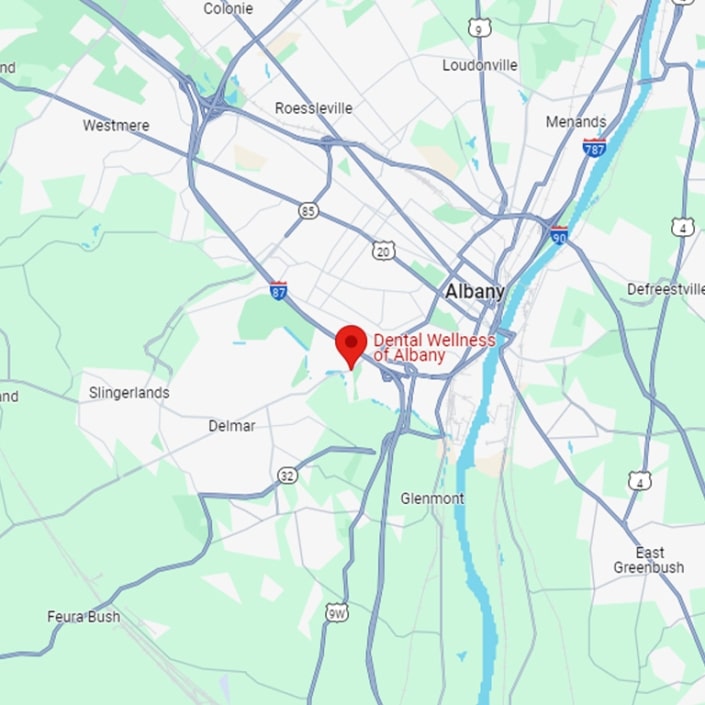
Reclaiming your chewing confidence and oral health begins with a personalized biological implant evaluation. Located conveniently on Delaware Avenue near the Route 85 intersection, Dental Wellness of Albany serves patients from Albany, Delmar, and Bethlehem. Dr. Robert Herzog, Dr. Tricia Primomo, and Dr. Tae Kim bring extensive biological expertise to every restorative treatment plan. Contact our office today to discover how non-toxic zirconia implants can rebuild your smile safely.